
Plan Change 2
Current context
The Environment Court released its final decision on Plan Change 2 in June 2026. You can read the final decision here. It should be read in conjunction with the court's interim decision on Plan Change 2, which was released in December 2025. You can read that decision here.
The decisions set out the court’s findings on a range of matters, including enabling the Council’s provision for an alternative consenting pathway to Table 14.2, which is now known as Table 12.
We have only just received the final decision, and need time to work through it to make sure we implement Plan Change 2 correctly. However, we can say the final decision does mean people with existing intensive farm land uses have a pathway to obtain consent for their activities. We hope this news will bring comfort to farmers and growers across the region who have been operating with significant uncertainty for an extended period of time.
We have a webpage with FAQs we hope will help answer some questions in the meantime. We will update that webpage, which you can find here, as and when we have more information to provide about implementing Plan Change 2.
Background
Plan Change 2 (PC2) seeks to improve the workability of the One Plan provisions that manage existing intensive farming land uses (dairy farming, commercial vegetable growing, cropping and intensive sheep and beef) in target water management sub-zones. Horizons identified that the policies and rule framework for managing existing intensive farming land uses were not working in the manner intended at the time the One Plan was made operative. The One Plan intended for most farms using good management practice to be able to meet Table 14.2 (now known as Table 12) cumulative nitrogen leaching maximums, and be considered as controlled activities.
PC2 has clarified and amended the nutrient management framework so it effectively works towards achieving the strategies for surface water quality set out in the One Plan. The plan change has updated the cumulative nitrogen leaching maximums in Table 12 to reflect the best available Overseer modelling information; provide a workable pathway for existing intensive farming land use activities to apply for resource consent where they cannot meet Table 12 within targeted water management sub-zones; and reinforce good management practices as part of intensive farming land use activities. PC2 enables Horizons to return to effective regulation of existing intensive farming land uses through the One Plan.
Plan Change 2 Timeline
21 October 2019 | Submissions closed |
3 December 2019 | Further submission period closed |
May 2020 to June 2020 | Pre-hearing meetings |
July 2020 to August 2020 | Expert conferencing |
September, 2020 | Pre-hearing reporting and evidence |
October, 2020 | Hearing of submissions |
2020 to 2021 | Decision on submissions |
13 April 2021 | Council makes decision on recommendation |
Recommendation received from Hearing Panel provided to Regional Council for them to make a decision whether to adopt | |
21 April, 2021 | Public notification of decision |
2021 to 2026 | Appeals period to Environment Court |
June 2026 | Environment Court Decision |
Plan change made operative |
Background - Nutrient Management in the One Plan
The policies and rules in the One Plan manage nutrient leaching to water by intensive farming land uses.
When excess nutrients make their way into surface and groundwater, they can boost algal growth and affect water quality and life supporting capacity of freshwater and aquatic environments. The plan limits the amount of nitrogen that can be leached by intensive farming land uses by setting cumulative nitrogen leaching maximums. The maximums apply to existing farms in target catchments where there is poor water quality and farming is a significant land use across the catchment, and to new farms (conversions) anywhere in the region.
Cumulative nitrogen leaching maximums were developed using the Overseer modelling software, allocating leaching limits according to the productive potential of the land – known as the ‘natural capital’ approach. The Regional Policy Statement policy directs that these limits must be “achievable on most farms using good management practice.”
It was intended that intensive farming land uses that could meet the cumulative nitrogen leaching maximums in Table 14.2 of the plan would be able to obtain consent as a ‘Controlled’ activity, which must be granted. Those intensive farming land uses that could not meet the maximums would be able to seek a consent as a ‘Restricted Discretionary’ activity, which could be declined.
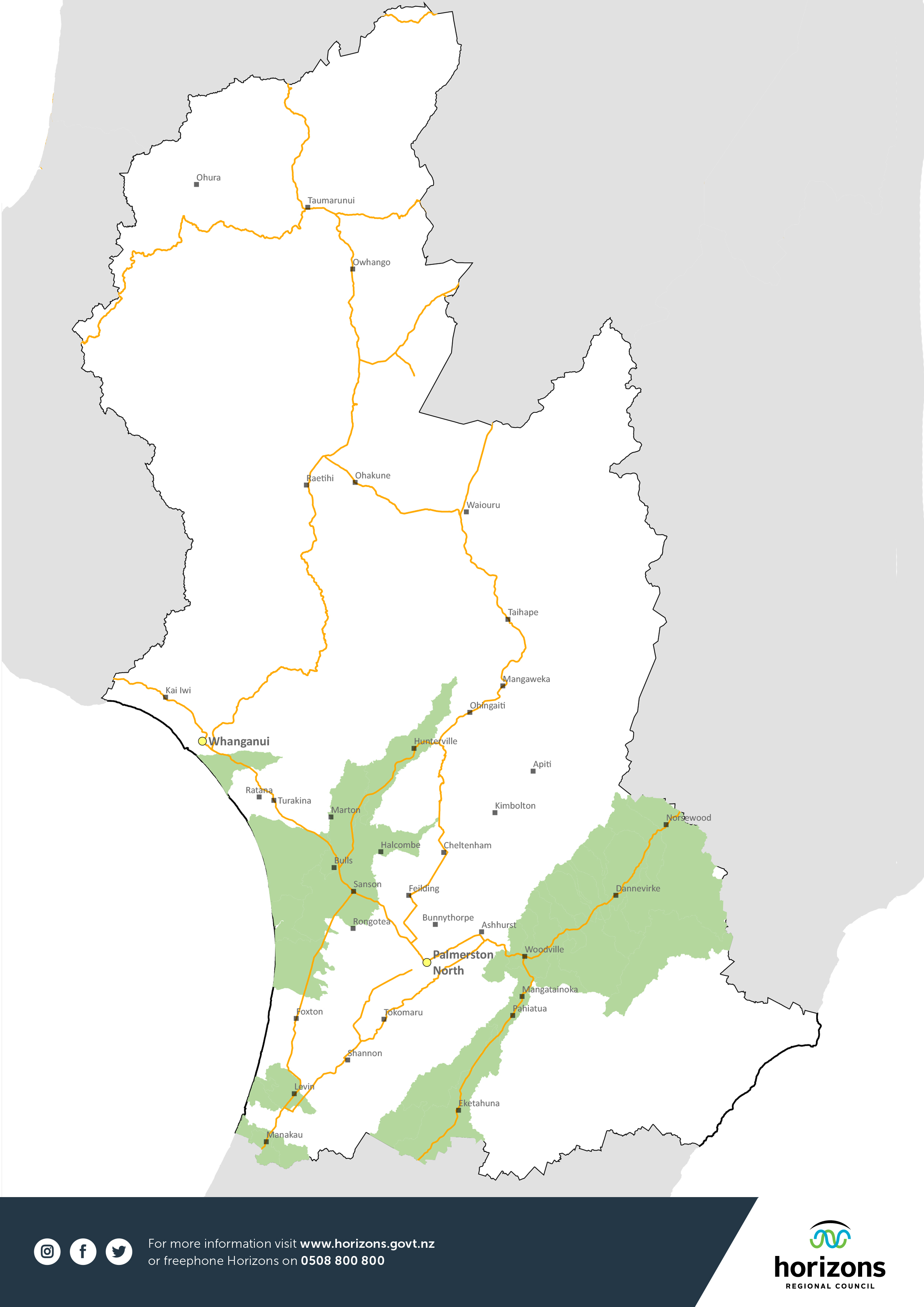
See Nutrient Management Supporting Information for more information.
Why was Plan Change 2 Needed?
At the time PC2 was lodged, the One Plan provisions to manage nutrient leaching were no longer working as intended as the result of two external factors which arose after the One Plan became operative:
There have been ongoing changes in the Overseer model. This means that farm systems that could have met the cumulative nitrogen leaching maximums in Table 14.2 of the One Plan, using the Overseer version that was used to originally develop them, no longer do so when modelled in the current version. This is the case even if nothing has changed in the farm’s practice in real terms.
Changes in case law require the provisions to be applied in a way that may not have been anticipated when the One Plan was prepared. Directive policies to achieve or not exceed the cumulative nitrogen leaching maximums now make it very difficult to grant consent in circumstances where the limits are not met, even though the rules are written to provide for this to be considered.
As a result, very few existing intensive farming land uses could meet the cumulative nitrogen leaching maximums in Table 12. It was almost impossible to grant resource consents for these activities, even if the land use has not substantially changed since the One Plan became operative. There are about 250 farms affected across the region which fall into this category. Those activities were effectively not regulated, delaying environmental improvements.
The uncertainty of this situation for intensive farming land use farmers was having considerable social and economic effects. Strict enforcement of the operative provisions would have even greater social economic effects, with potentially serious consequences for intensive farming businesses in the Manawatū-Whanganui Region.