
Horizons and Overseer
Overseer is a tool used by Horizons and other regional councils to model nutrient losses for the purposes of planning, consenting and auditing.

Overview
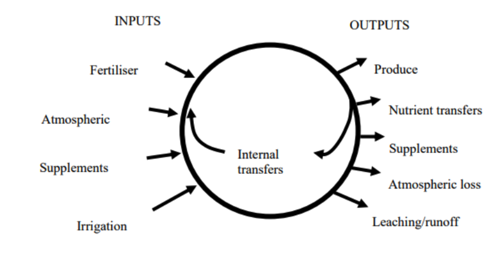
Overseer is a tool for capturing on-farm data and monitoring to consider the potential impacts of farm management practices on nutrient flows, greenhouse gas emissions, and water quality in order to assist with informing decision-making.
On 11 August 2021, central government released its report entitled The Government response to the findings of the Overseer peer review report. This report was Government’s response to the questions raised by the Parliamentary Commissioner for the Environment. As part of producing its report, the Government commissioned advice from a panel of experts. In summary, the expert Science Advisory Panel (SAP) concluded that in its current form, it does not have confidence in Overseer's ability to accurately quantify nutrient loss, magnitude and error and therefore questioned its reliability as a regulatory tool.
In response, the Government committed to providing continued support for Overseer. The Overseer Redevelopment Programme Report, released in August 2023, addresses the key concerns raised by the SAP panel in relation to Overseers reliability as a regulatory tool. The Overseer validation work showed a strong correlation between measured and modelled nitrate loss data. Considering the outputs from the Overseer redevelopment programme, MfE revised its guidance and supported the use of Overseer as a tool to support regulation.
Horizons Regional Council and Overseer
Horizons Regional Council values the use of Overseer as a tool for decision making around nutrient management.
Horizons uses Overseer for:
Nutrient Budgeting: Calculates nutrient flows (fertiliser, stock, soil, plants) to estimate potential losses (leaching, runoff) from farms.
Regulatory Frameworks: Forms a basis for rules in regional plans (e.g., Plan Change 2) to manage intensive farming and meet water quality targets.
Resource Consents: Helps determine consent conditions for farms, especially for nitrogen discharge limits.
Farm Planning: Supports farmers in creating their own nutrient management plans to improve efficiency and reduce environmental impact
Horizons uses Overseer cautiously, and we are committed to using a multi evidence-based approach when using Overseer as part of decision making.
Plan Change 2
Plan Change 2's (PC2) objective is to resolve implementation issues with the original One Plan, which made it difficult for some farmers and growers to obtain the necessary resource consents. PC2 provides alternative pathways for those who cannot meet existing nitrogen leaching maximums (now Table 12 but was Table 14.2 in the One Plan).
Overseer nutrient budget model is a key component of the PC2 framework used to estimate nitrogen losses and set consent limits. This is as a result of the process of PC2 going through a hearings panel, and then the Environment Court. The Environment Court released its final decision on PC2 in June 2026, which you can learn more about here. However, an announcement from central government in August 2026 means a consenting pathway which relied on Overseer use.
You can keep up to date with PC2 consenting information here.
Essential Freshwater (NPS-FM and NES-F)
Horizons is currently in the process of preparing a revised One Plan to give effect to the National Policy Statement for Freshwater Management (2020).
Regulation/use of farm plans to reduce nutrient losses from farms will be an important part of the Plan.
Applicants are required to supply Overseer assessments as part of their applications. As mentioned, Horizons is mindful of taking a multi-evidence-based approach when using Overseer to make decisions.