
Freshwater
Horizons works in partnership with the community to protect and enhance our region's waterways. These waterways are a vital resource; crucial to our economic, environmental, social and cultural wellbeing. Through our regulatory and non-regulatory work programmes we aim to restore pride and mana in the region's waterways and ensure they are available for the enjoyment of future generations.

Riparian management
Riparian zones are important areas within our landscapes, they include the margin of land between the water and dry land, they are rich in biodiversity and play a critical role in maintaining aquatic health. They have multiple functions, including; filtering nutrients and other contaminants from overland runoff and shallow sub surface drainage, protecting stream bank stability, improving aquatic habitat and protecting water quality. The functionality of riparian zones can be significantly enhanced by excluding stock and appropriate re vegetation.
If you are looking to carry out riparian fencing and planting on your property, please get in touch with one of the Freshwater Team via our freephone number, 0508 800 800. Your project may be eligible for funding assistance, but we can also provide useful advice including appropriate set back margin for your fence, suitable plants and how to source them.
Riparian planting guides, one for each ecological area in our region

Plant Guide - what to plant where
Wanting to plant an area but not sure what species you should choose? Check out our Plant Guide - a nifty tool to help you choose the native species for restoration plantings that are most suited to your location.

Opening native habitat Fish Passage
Around three quarters of our native fish species are classified as threatened (with extinction) or at risk of being threatened, so it is important we protect aquatic habitat and ensure it can be accessed by all our freshwater fish species. Many of our native fish species are diadromous, meaning they need to move between freshwater and the sea to complete their lifecycles. To ensure this migration is possible they must be able to move freely both up and down streams and rivers. Therefore, it is vital that in-stream structures such as culverts, dams and weirs, do not create barriers to this migration. Many of these structures are perched (overhanging) which means that the outlet of the water coming down the stream hangs above the downstream water level. This creates waterfalls and high velocity water which impedes fish movement.
Legislation exists in both the Freshwater Fisheries Regulations 1983 and the Resource Management Act 1991 which regulate the requirement for fish passage. It is essential you check with your Regional Council before installing any new instream structures, to ensure it complies with fish passage and other regulations.
Fish Passage Remediation
If you have an existing structure which you think may present a fish barrier, or would like advice around fish passage, please contact the Freshwater Team via our freephone number, 0508 800 800.
Types of fish passage, or fish passage remediation, can include:
Baffles
Obstacles placed on the floor or walls of a culvert to break up flow and provide lower-velocity zones for fish to swim and rest.
Rock Ramps
Natural rock structures designed to help fish navigate over vertical drops or weirs.
Mussel Spat Ropes
A cost-effective retrofit for existing culverts, allowing climbing fish species to climb through.
Fish Ladders/Passes
Structured, sometimes concrete, systems using pools or baffles to help fish move upstream.
Engineered Bypasses
Channels designed to steer fish around a barrier.
Fish passage remediation - a special case study of Ākitio Upper Weir
Other fish passage remediation projects:
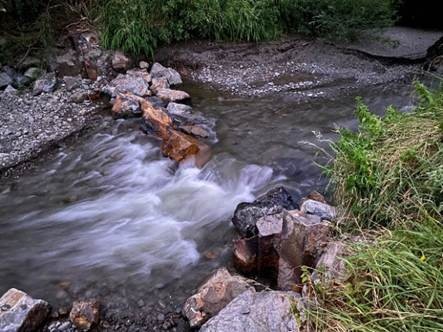
Manga-atua Weir modification
Barrier - sheet piling gauging weir with concrete cap which was perched causing high velocity water to pass over it
Result - modification of the weir by removing cap and cutting down the sheet piling to downstream bed level. This opened up 127km of stream to Īnanga, long and shortfin eels/tuna which are the species most likely to inhabit upstream of this barrier.
|
|
|---|
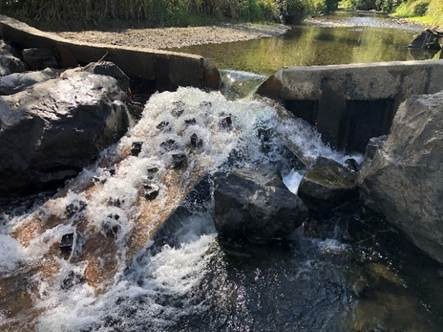
Koitiaka Stream
Structure - Concrete weir which was perched causing high water velocity.
Remediation: Stainless Steel Fish Ladder.
Native fish species likely to inhabit upstream of barrier - Īnanga, longfin and shortfin eel/tuna.
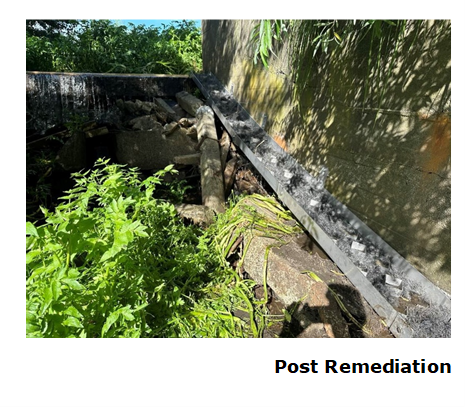
Titoki Stream
Structure - concrete culvert
Obstruction - perched culvert
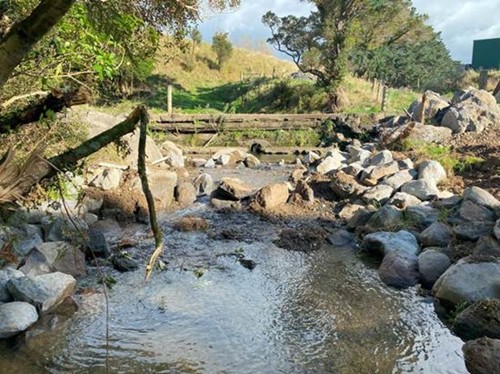
Remediation - concrete rock ramp, two leaky weirs and wing wall armouring
Native fish species likely to inhabit upstream of barrier - īnanga, longfin and shortfin eel/tuna
|
|
|---|
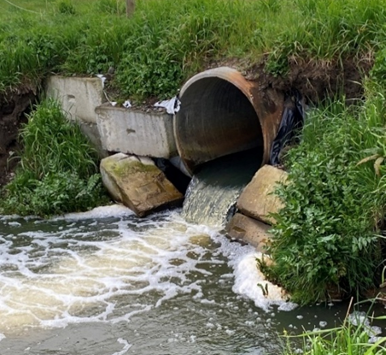
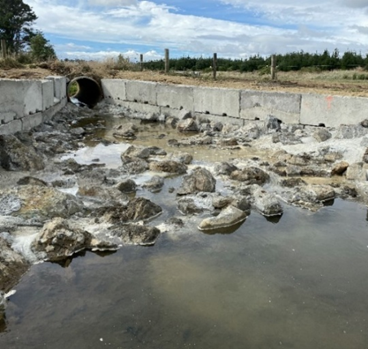
Lower Mangapukatea Stream Remediation
Structure - concrete flaxmill weir
Obstruction - perch
Remediation - stainless steel fish ladder
Native fish species likely to inhabit upstream of barrier - long and short eel/tuna, common bully, banded kōkopu, redfin bully and īnanga.

Whitebaiting Regulations
Whitebait are juvenile native fish that live in our freshwater, made up of six species: īnanga, shortjaw kōkopu, giant kōkopu, banded kōkopu, kōaro, and common smelt.
Whitebaiting regulations exist to help reduce fishing pressure on our native fish. Following these regulations is an important part of ensuring the future of whitebait species.


