
Biosecurity in our region Pest plant biocontrol
The biocontrol programme exists to carry out releases of new and existing biocontrol agents against established pests, and to support research efforts into new agents.

Biological control or biocontrol has resulted in substantial pest plant management gains through the use of one living organism to control another. These natural enemies are particularly useful for controlling widespread weeds that are well established, are heavy seeders, or have large seed banks. Once they are well established and widespread there is no need to make further releases as the population disperses and becomes self-sustaining. However, it can take many years (decades even) for the population to build up to a point where it impacts substantially on the host plant.
It is worth noting that successful biocontrol does not eradicate its host. Success may mean a reduction of infestation size, vigour, or abundance into the foreseeable future. It should be viewed as a tool that complements other weed management options. Biocontrol may reduce population levels to a point where control using physical or chemical methods is minimised, or even unnecessary.
For more information check out the Landcare Research website.
Purple loosestrife weevil and leaf beetle release
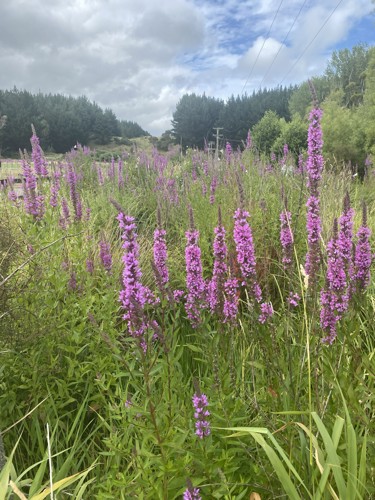
Purple loosestrife (Lythrum salicaria) is an invasive pest plant that grows along stream banks, lake edges and drains. It displaces native species and constricts waterways which can lead to flooding and loss of recreational use. The plant is present in the region, primarily in the Horowhenua District where it has firmly established infestations along the edges of Punahau Lake Horowhenua and down the Hokio Stream to the coast.
With the inability to use traditional methods for effective control of these infestations, Horizons looked to biocontrol to help manage them. We’ve worked closely with Muaūpoko Tribal Authority and Lake Horowhenua Trustees to produce an integrated pest management plan, which looks to reduce the abundance of purple loosestrife in established areas and eliminate outlying populations.
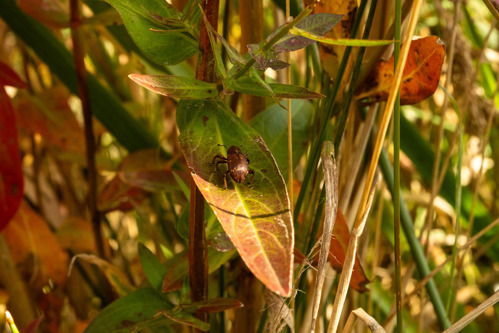
In 2025, four insects were approved by the Environmental Protection Agency for release in New Zealand, including two leaf beetles, a root weevil, and a flower weevil. In April 2026, the first round of root weevil (Hylobius transversovittatus) and one of the leaf feeding beetle (Galerucella pusilla) species were released around Punahau. Further releases of the root weevil and leaf beetles are planned for the 26/27 growing season.
|
|
Sydney golden wattle bud-galling wasp
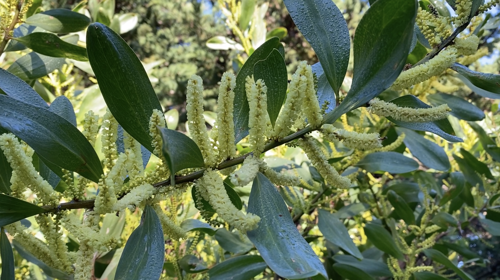
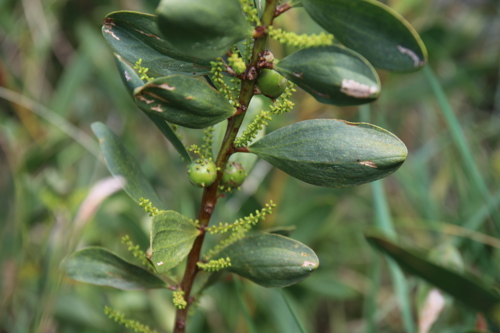
Sydney golden wattle is an invasive shrub/tree species which grows rapidly and forms dense thickets. It produces lots of seeds and is highly tolerant of varying conditions, meaning it spreads easily with little competition.
The plant was also a problem in South Africa and Portugal, but they had seen promise in the use of biocontrol agents to help control the spread. After assessing the use of a non-stinging wasp species in these countries to help tackle Sydney golden wattle, it was determined the wasp would not impact our native plants. In late 2022, Horizons was granted permission by the Environmental Protection Authority (EPA) to introduce the non-stinging wasp.
The wasp, Trichilogaster acaciaelongifoliae, works by laying its eggs on areas that would normally become flower buds, which instead produce growths – known as galls. These galls prevent flowering and thus seed production, reducing the spreadability. The galls also feed the young wasps, which then emerge as adults for only about three days to lay eggs, thereby creating more galls the following year. The process repeats and the population grows over time.
The wasps were released in 2022 at Whanganui and Waitārere and have successfully established at both sites. One of the sites at Whanganui has established to the point where galls will be able to be harvested and spread further afield in the region.
|
|
Old man's beard gall mite
Old man’s beard (Clematis vitalba) is a invasive vine species that smothers native vegetation, shading out plants and collapsing the canopy. Horizons control it in some parts of the region where it is feasible with low infestation numbers. In areas where it is firmly established Horizons has released two biocontrol agents to reduce the impact that old man’s beard is having in those areas.
The old man’s beard gall mite (Aceria vitalbae) is a microscopic mite that reproduces rapidly and attacks the plant by feeding on the young shoots and leaves on the plant forming galls and deforming the shoots. Horizons first released the mite in the Rangitīkei in 2021 and subsequent releases have seen the mite population expand rapidly with the mite now present in most old man’s beard populations in the region. Staff will continue to monitor infestations for signs of damage as the population continues to build up.