
Impacts and Projections
The impacts of climate change are wide-ranging, rippling out beyond weather patterns to affect people’s assets and community infrastructure, biodiversity and human health.
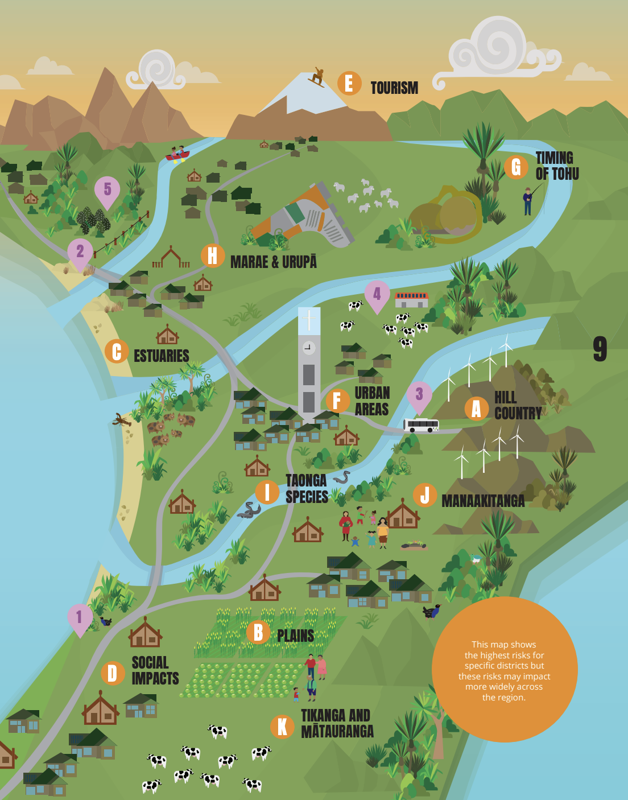
The Manawatū-Whanganui Regional Climate Change Risk Assessment highlights specific risks for the districts of our diverse region.
A Hill Country: Transport networks damaged by landslides and soil erosion. Extreme weather events cause crop damage and economic disruption. Increased fire risk.
B Plains: Damage to housing, public spaces and infrastructure from flooding. Crop damage caused by drought.
C Estuaries: Erosion and coastal inundation in some coastal areas - damage to commerical and residential buildings, and energy infrastructure.
D Social Impacts: Risk of inequitable outcomes as costs and impacts fall unevenly across the community.
E Tourism: Reduced snow and ice cause economic disruption. Extreme weather events impact tourism.
F Urban Areas: Landslides, soil erosion and inland flooding highest risk to urban areas like Palmerston North. Extreme weather events. Water supplies affected by reduced rainfall and drought.
G Tohu* change and are less reliable, affecting planting, resource gathering and hunting.
H Damage to culturally significant marae and urupā from flooding and erosion.
I Loss of taonga species (in freshwater systems, on land, and along the coast) as the climate warms.
J Manaakitanga threatened if manuhiri cannot be offered local delicacies and marae are damaged.
K Loss of tikanga and mātauranga around resources, affecting future generations.
For more detailed information on climate risks across the region, see the Manawatū-Whanganui Regional CLimate Change Risk Assessment Sept 2021.