
Whenua Land
Horizons' land management work focuses on reducing erosion, protecting soil health and encouraging sustainable use of our land resources. To carry out this work we lead and support a number of work programmes across the region including the Sustainable Land Use Initiative (SLUI).


Rural Advice
Horizons’ rural advice team is on hand to provide advice and practical solutions to all farmers in our region.

Horizons and Overseer
Overseer is a tool used by Horizons and other regional councils to model nutrient losses for the purposes of planning, consenting and auditing.

Plant in our Region
Planting the right tree, in the right place, for the right purpose benefits both the environment and our communities. Learn more about the types of plantings, species guides and get help here.
Sustainable Land Use Initiative (SLUI)
Over half our region’s land is classified as hill country and, in an economy defined by agriculture, it is vital to manage this land sustainably. SLUI takes a 'mountains to the sea' approach to protecting our valuable hill country soils where they are at risk of moderate to severe erosion. By keeping this soil on our hills and out of our waterways, we can enhance water quality and increase land productivity.
SLUI uses a variety of tools, with a key part of the programme being based around the development of Whole Farm Plans (WFPs) with individual farmers. These plans are voluntary and once developed are followed up with a works and incentive programme aimed at reducing erosion.
From 1 March 2026 until 30 June 2027, grant rates and caps for most* SLUI works have increased by an additional 20%. Note this is not retroactive, and only applies to works approved on or after 1 March 2026 to 30 June 2027. *Excludes space planted poplar/willow works (including planting and maintenance).
If you are interested in learning more about funding available, please read more on the handout below. Note the funding changes are not reflected in the document below. For the most accurate estimate of works, please contact your LMA.

Land management and works funding
Everyone in Horizons Region benefits from SLUI either through increased flood protection, better water quality, or protection of hill country and native habitats. For this reason, all ratepayers pay a Uniform Annual Charge to fund the programme. Central government also contributes.

For land management advice Get in touch with your LMA
Our team’s programme is targeted at reducing erosion control and reducing sediment in our region’s waterways by allowing revegetation on erosion-prone land.
If you're looking for advice on fencing of wetlands, bush, riparian areas in hill country or afforestation, or planting of poplar poles, we can help. We can advise you on our different criteria and funding levels on offer, and help with land management issues.
Get in touch with your local LMA using the contact details on the map or at the bottom of this page, or send us an enquiry using the Contact Us button below.
Sign up for our newsletter Land Team Update
Interested to keep up with the latest in the land space? Sign up for our newsletter or view past newsletters here.

Ballance Farm Environment Awards
Horizons sponsors the Ballance Farm Environment Awards (BFEA) for our region each year. The awards showcase and celebrate the best in sustainable farming systems, biodiversity and more.
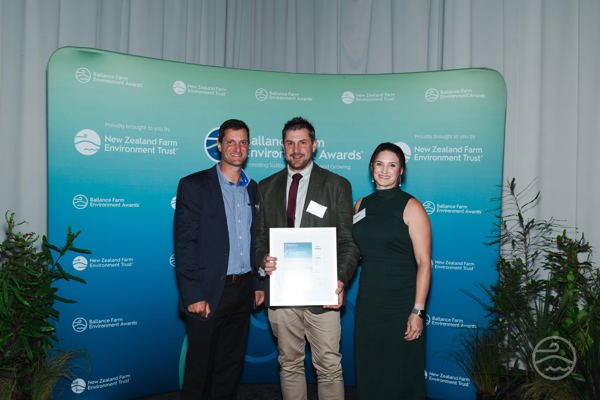
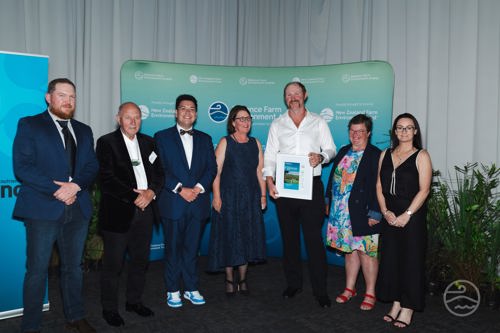
The 2026 winners of the Horizons Regional Supreme Award were Jarred and Bronwyn Clode of Te Hou Farms Limited Partnership. Running a roughly 1,300ha dairy farm in the Rangitīkei District near Bulls, Jarred and Brownyn’s operation displays the very best in land management. With a deep knowledge of soil health and commitment to improving water quality, they were clear winners of several awards:
Ballance Agri-Nutrients Soil Management Award
Hill Labs Agri-Science Award
Norwood Farming Efficiency Award
DairyNZ Sustainability and Stewardship Award
Bayleys People in Primary Sector Award
FMG Risk Management Award
WaterForce Safe Water Recognition Award
The remaining awards went to:
Alan and Kerri Blake of Triple Farms: Beef + Lamb New Zealand Livestock Farm Award, and Rabobank Agri-Business Management Award
Brayden McKenzie of Circle D Ranch: Horizons Regional Council Award for the Integration of Trees
Derek Mickleson of Henare Trust: Ministry for the Environment Biodiversity Award, and Margaret Matthews Trophy for Commitment to Sustainability
|
|
Industry partnerships
We recognise the need to work alongside others involved in the farming industry to develop sustainable land use.
We're proud to work alongside and support the Ballance Farm Environment Awards, Poplar and Willow Research Trust, forestry industry research, Beef & Lamb programmes and a number of catchment groups throughout our region.